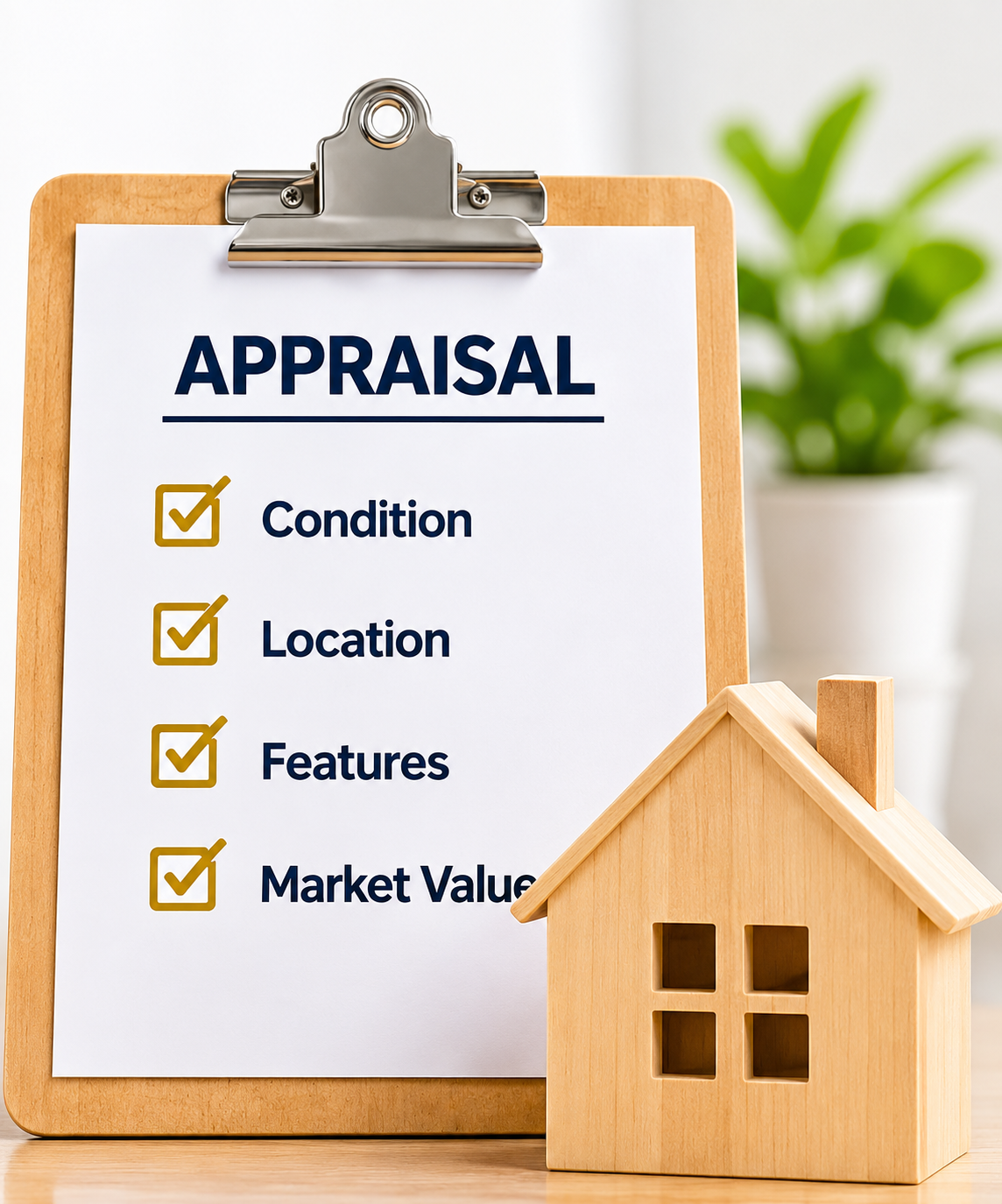
When you apply for a mortgage, an appraisal is a standard step. It helps the lender confirm the home’s value and makes sure the loan amount is appropriate for the property.
What Is a Home Appraisal?
A home appraisal is an assessment of a property’s market value, completed by a licensed appraiser. Lenders use it to confirm that the home is worth the purchase price and to reduce their risk.
The Purpose of an Appraisal
The appraisal gives both you and your lender confidence in the property’s value. It helps by:
Protecting the Lender’s Investment
Confirms the home is worth the loan amount.
Providing a Fair Purchase Price
Helps ensure you’re not overpaying.
Establishing the Home’s Market Value
Gives a professional, unbiased opinion of what the property is worth today.
How the Appraisal Process Works
1
Step 1: Ordering the Appraisal
Lender orders an independent appraisal.
2
Step 2: Scheduling the Property Visit
Appraiser arranges the inspection visit.
3
Step 3: Property Inspection
Size, condition and features are assessed.
4
Step 4: Market Research and Analysis
Recent comparable sales are reviewed.
5
Step 5: The Appraisal Report
Final value and findings go to the lender.
What Happens If the Appraisal Comes In Low?
If the appraisal is below the purchase price, you can renegotiate, increase your down payment, challenge the valuation, or use an appraisal contingency.
Typical Costs and Timeline
Appraisal costs and timing can vary by location and property type, but here’s what to expect:
Cost
Typically $400–$900 for single-family homes; surveys may add $150–$250.
Timeline
Typically 7–10 days, depending on property and market conditions.
Can Vary By
Location, property size, complexity, and current market conditions.
Preparing for the Appraisal
A little preparation can help ensure a smooth process and a strong result. Consider these steps:
Keep the home clean and well-maintained.
Complete any small repairs, such as leaky faucets or broken fixtures.
Make sure key areas (like the attic, basement, and garage) are accessible.
Highlight recent upgrades or improvements (e.g., new roof, HVAC, or kitchen updates).
Provide a list of major renovations or features that add value.
Ensure the property is presentable and shows its best condition.
The Bottom Line
A home appraisal is a key part of the mortgage process. It provides an objective value, protects everyone involved, and helps keep your purchase on track.